It’s a late October morning in Salamanca, Spain, as rain pelts the asphalt and cobblestone streets of the city. It’s hard to keep balance on the wet roads scattered with crumpled leaves but the storm brings a crisp newness in the air, yet another sign of the changing seasons.
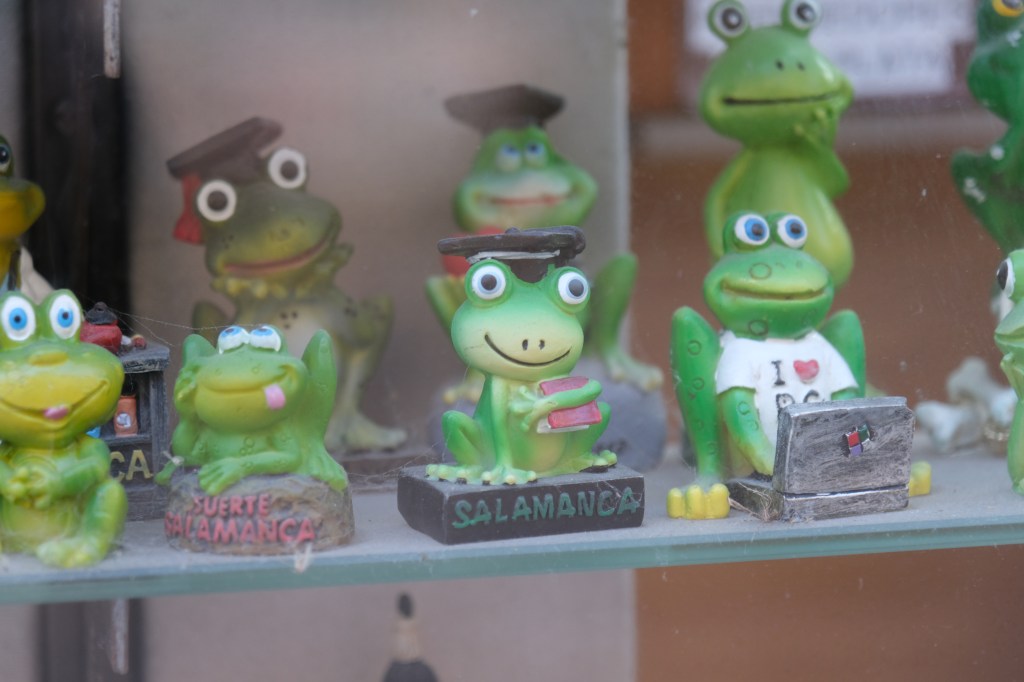
On one corner, a Baroque and Gothic style cathedral towers over the city, requiring tourists to tilt their heads all the way up to see it in its entirety. The next block over, a Renaissance-era building peeks through winding streets and creates a unique fusion of architecture. Upon turning the corner, every single gift shop within a kilometer radius is packed full of frog memorabilia.
Yes, frogs. The amphibians.
It’s natural to wonder what frogs have to do with Salamanca at all, but the history of the animal in the city spans all the way back to the 15-16th centuries.
The legend says finding the stone frog, often referred to as Parrita, atop a skull in the intricate facade at the University of Salamanca is good luck for passing exams; so long as it’s found without help. If the lucky person isn’t a student, then finding the frog can bring good luck in general or a guaranteed return to Salamanca. The University of Salamanca is one of the oldest continuously operating universities in the world, and the longest lasting in Spain. The school first opened its doors in the year 1218, just over 800 years ago.
Although it’s now a beloved icon between students and tourists alike, the frog wasn’t always a part of the university’s building.
In the late 1490s, Prince Juan (the only son of the Catholic Monarchs at the time) made his way from the Asturias province situated in northern Spain to Salamanca to attend school at the University of Salamanca. Soon after his arrival, Prince Juan fell ill and passed away at the age of 19. The skull that the frog sits on is representative of Prince Juan himself, paying homage to his life.
The frog is supposed to represent Doctor Parra, the man who attempted to heal Prince Juan from his illnesses, hence the nickname Parrita (Little Parra).
Flash forward to today, herds of people still crowd around the facade in hopes of finding the coveted stone frog. Many of their necks are sore, and their shoes drenched from spending well over half an hour looking, yet no one spoils the surprise for others when they find it. Perhaps the legend is true, or maybe it’s not. The only thing you have to do is look up.
 Amelie A. Van Hess
Leave a comment